Valve selection is one of the most critical decisions in process system design. The right valve delivers reliable flow control, process safety and operating efficiency; the wrong one leads to early failure, process upsets and high maintenance costs. This article gives process engineers a structured approach to valve selection.
Valve Classification
By Function
Isolation valves (on/off) fully open or close the flow path. They include gate, plug, ball and butterfly valves and are typically used for equipment isolation, maintenance and emergency shut-off.
Control valves (throttling) regulate flow precisely. Globe valves, characterised control valves and specially designed rotary valves provide continuous modulation in response to process signals.
Check valves (non-return) automatically prevent reverse flow and protect equipment from backflow and water hammer. Spring-loaded and swing types suit different applications.
Common Body Designs
- Globe valve: the flow path turns 90° twice inside the body, giving good throttling but higher pressure drop. Available as single-seat, double-seat and cage-guided designs.
- Gate valve: uses a wedge or parallel gate perpendicular to the flow, with minimum pressure drop when fully open. Suitable for isolation but not throttling, which causes cavitation and erosion (wire drawing).
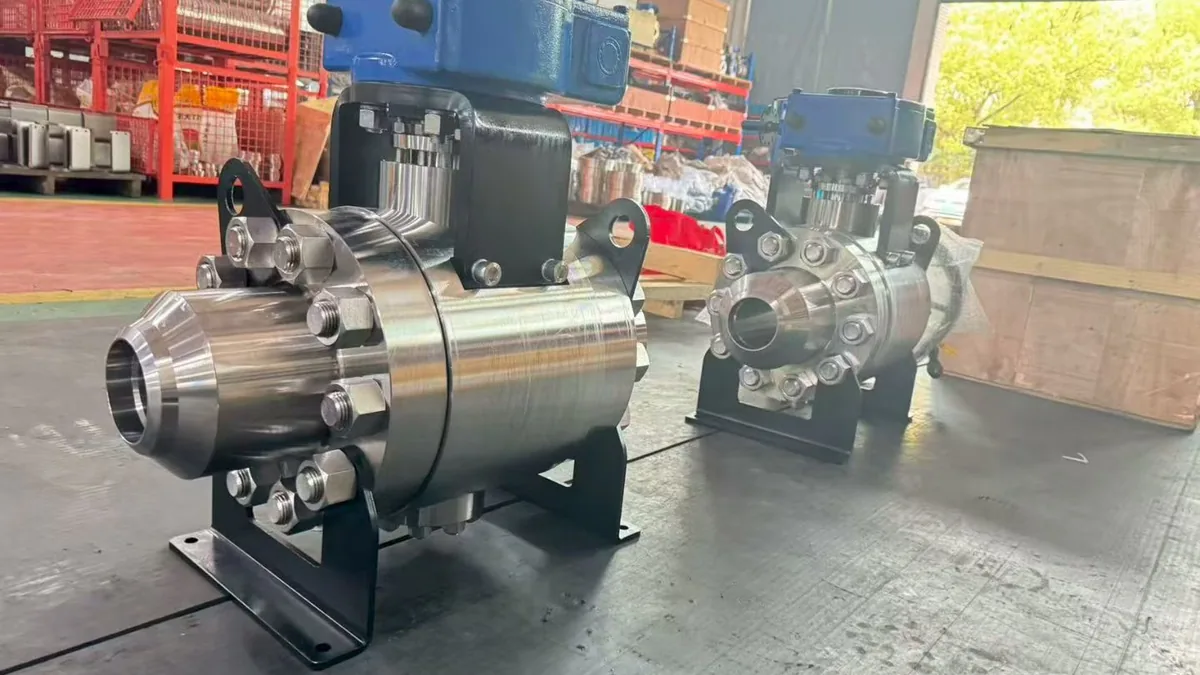
- Ball valve: a spherical closure member turns 90° to open or close. Good sealing, compact design, bidirectional sealing, available in reduced bore and full bore.
- Butterfly valve: opens and closes with a disc rotating in the flow path. Economical in large sizes with moderate pressure drop; lined or high-performance designs give good throttling.
- Plug valve: a cylindrical or tapered plug turns to open or close. Suitable for multi-port and frequent operation.
Basis for Valve Selection
Process Parameters
Fluid viscosity, density, temperature, vapour pressure, corrosiveness and solids content fundamentally affect valve choice. High-viscosity fluids suit full bore designs, while corrosive fluids need special materials or linings.
Pressure, temperature, flow and their variation over the operating cycle determine pressure class, materials and seat design. Available pressure drop also affects valve type and size: control valves need enough pressure drop for stable control, while isolation valves should have minimum pressure drop when fully open. Whether flow is constant, whether throttling is needed and how precise control must be determine whether an isolation valve or a control valve is required.
Service Classes
- General service: standard industrial applications within normal temperature and pressure ranges, with non-corrosive, non-toxic fluids.
- Severe service: high pressure drop causing cavitation or flashing, high temperature, erosive or corrosive fluids, or safety-critical applications needing higher reliability.
- Toxic/lethal service: special attention to fugitive emissions, emergency operation and redundant sealing.
- Cryogenic service: very low temperatures require special materials, extended bonnets and thermal design to prevent heat ingress from the environment.
Selection Points by Valve Type
Gate Valves
Gate valves suit isolation of liquids, gases and steam, especially where low pressure drop and straight-through flow are needed. Solid wedge gates are simple and robust for general service; flexible wedge gates accommodate thermal expansion and pipe loads better and reduce the risk of sticking; parallel double-disc gates are spread by a wedge mechanism for bidirectional sealing in high-pressure services.
Gate valves are commonly used as main isolation valves for equipment, pipelines and tank connections. They are not recommended for throttling, slurries or frequent operation.
Globe Valves
Globe valves throttle well and close reliably, making them the basic valve type in process control systems. Single-seat designs give tight shut-off for smaller sizes and lower pressures; unbalanced plug forces limit them at higher pressures. Double-seat designs are force-balanced and can work at higher pressures with reasonably sized actuators, but shut-off is not as tight as single-seat. Cage-guided designs are the mainstream modern control valve: the cage guides the plug and sets the flow characteristic, with easy maintenance, good rangeability and optional anti-cavitation trim.
Globe valves suit flow control, pressure reduction, temperature control loops and applications needing frequent throttling or reliable shut-off.
Ball Valves
Ball valves combine good sealing, compact design and low operating torque, and have a very wide range of applications. In a floating ball valve, line pressure moves the ball slightly against the downstream seat to seal; limited by seat loading, it is generally used for moderate pressures and smaller sizes. A trunnion mounted ball is supported by upper and lower stems with spring-loaded seats, suitable for higher pressures and larger sizes with stable sealing. V-port ball valves have a V-shaped opening for good throttling and can replace globe valves in some applications. Metal seated ball valves are used for high temperature or abrasive fluids, trading some shut-off tightness for durability.
Ball valves suit general isolation, especially where bidirectional sealing, frequent operation, tight shut-off and low maintenance are required.
Butterfly Valves
Butterfly valves are an economical choice for large sizes with moderate pressure drop. Concentric butterfly valves rotate the disc about its centreline; they are simple and low cost but have limited sealing performance, and the disc and seat wear easily. High-performance eccentric butterfly valves (double offset, triple offset) avoid friction between disc and seat during opening and closing, giving better sealing and lower torque, close to isolation valve performance. Lined butterfly valves with rubber or PTFE linings resist corrosion and seal well for chemical service.
Butterfly valves suit low-pressure isolation, throttling (high-performance types), chemical fluids (lined types) and cost-sensitive large-diameter applications.
Special Considerations for Control Valves
Flow Characteristics
Control valve trim sets the relationship between flow and travel. With a linear characteristic, flow is proportional to travel, suitable where valve pressure drop is roughly constant. With an equal percentage characteristic, the change in flow per unit of travel is proportional to the flow before the change; it compensates for the falling pressure drop as the valve opens, giving a nearly linear installed characteristic in typical systems. A quick opening characteristic gives the largest flow change at small travel and is used for on/off control.
Rangeability
Rangeability is the ratio of maximum to minimum controllable flow and is set by process control requirements. Standard trims generally give 30:1 to 50:1, enough for most applications; high-performance trims can reach 100:1; severe service trims may give up some rangeability to achieve anti-cavitation or noise reduction.
Noise and Cavitation Control
High pressure drop services are prone to damaging cavitation and excessive noise and need special trims: multi-stage pressure reduction drops pressure gradually through several stages so that no stage cavitates; labyrinth trims dissipate energy through many small tortuous passages to avoid a concentrated pressure drop that causes cavitation; low-noise trims reduce turbulence and break up vortex structures to lower noise.
Actuator Selection
Actuator Types
Pneumatic actuators are the most common for control valves, available as spring-diaphragm (limited thrust) and piston (higher thrust) types using instrument air. Electric actuators position precisely without an air supply; they cost more but are ideal for remote locations or where operation is needed without utilities. Hydraulic actuators deliver the highest thrust for very large or very high-pressure valves and need a hydraulic power system.
Fail-Safe Position
Process safety analysis determines the fail-safe position: air-to-open (fail closed) valves close on loss of air, for services where flow must be stopped on failure; air-to-close (fail open) valves open on loss of air, for services where flow must be maintained to avoid process upsets; fail-in-place uses an accumulator or lock-up device to hold the current position on loss of air.
Material Selection
Body Materials
- Carbon steel: the standard choice for non-corrosive service at moderate temperatures; A216 WCC is common for castings and A105 for forgings.
- Stainless steel: 316/316L is common for corrosive chemicals; for severe corrosion choose 317, 904L, duplex or super duplex.
- Alloy steel: chrome-moly alloy steels such as A217 WC6 and WC9 for high-temperature steam service.
- Special materials: nickel alloys (such as nickel-copper, nickel-chromium-iron and nickel-molybdenum-chromium alloys), titanium or tantalum for special corrosive services.
Trim and Seat Materials
Trim materials must resist erosion, corrosion and galling. 400 series stainless steel is acceptable for general service; cobalt-based hard facing or other hard surface treatments resist erosion and cavitation damage; trim in direct contact with the fluid should be equal to or higher grade than the body material.
Soft seats use PTFE, elastomers or composites and seal tightly but have a limited temperature range; metal seats withstand high temperature, wear and erosion but seal less tightly.
Valve Sizing Calculations
Liquid Service
Liquid valves are sized with the flow coefficient Cv:
Cv = Q × √(SG / ΔP)
Where Q is flow (GPM, US gallons per minute), SG is specific gravity and ΔP is pressure drop (psi). The rated Cv of the selected valve should be 1.2 to 1.5 times the calculated value to give enough capacity margin and avoid operating near maximum opening.
Cavitation check: calculate FL² × (P1 − Pv), where FL is the liquid pressure recovery factor and Pv is vapour pressure. If this value is less than the actual pressure drop ΔP, cavitation will occur and special trim or a valve redesign is needed.
Gas Service
Gas and steam calculations must account for compressibility. For common subcritical flow, flow relates to Cv, upstream pressure P1, pressure drop ratio x, gas specific gravity GG, upstream absolute temperature T1 and compressibility factor Z, roughly as Q ∝ Cv × P1 × √(x / (GG × T1 × Z)). Actual calculations must also include the appropriate unit constants and expansion factor.
When downstream pressure falls below the critical pressure (typically P2 below 0.5 × P1), flow reaches sonic velocity and becomes choked; lowering downstream pressure further does not increase flow.
Selection for Special Services
High-Temperature Service
High-temperature service needs extended bonnets to keep packing away from the hot zone, alloy steel bodies and high-temperature packing, and a design that allows for expansion and contraction from thermal cycling.
Slurries and Solids-Laden Fluids
For fluids with suspended solids, choose full bore designs such as knife gate valves or full bore ball valves to reduce blockage; use wear-resistant linings such as ceramic or rubber to extend life; and fit flushing connections for cleaning and to prevent build-up.
Cryogenic Service
Cryogenic service needs extended bonnets to prevent icing at the packing; austenitic stainless steel, aluminium or special alloys that stay tough at low temperature; and thermal design to reduce heat leak into the process fluid while preventing external icing.
Valve Standards
Pressure-Temperature Ratings and Dimensions
ASME B16.34 sets standard pressure-temperature ratings for valves; API 6D covers pipeline valve requirements and strict testing; ASME B16.10 defines face-to-face dimensions for interchangeability.
Testing Requirements
- Shell test: verifies body integrity at 1.5 times design pressure according to API, or according to the applicable code.
- Seat leakage test: shut-off tightness assessed to API 598, FCI 70-2 or IEC 60534-4.
- Fugitive emission test: to API 622 (packing), ISO 15848 or TA-Luft to meet environmental requirements.
How KFE Supports Valve Selection
KFE coordinates the supply of a wide range of valves, including control valves with standard, severe service and high-performance trims; gate, ball, butterfly and plug valves in various materials and sizes; swing, lift and dual plate check valves; and configurations for special services such as cryogenic, lined and high-temperature.
During selection we can help you choose valve types, check sizing calculations and material recommendations, and specify performance requirements such as Cv, shut-off class and noise in purchase documents together with the corresponding test verification. For special applications that need modification or customisation, we coordinate solution confirmation with the supplier.
Conclusion
Successful valve selection requires a systematic evaluation of process conditions, service requirements and performance targets. With a good grasp of valve types, sizing methods and special service considerations, engineers can specify valves that run reliably for the long term.
Contact KFE about your next project. We respond quickly to technical questions, help check sizing calculations and provide detailed specification recommendations.
Related industry: Metals & Power Generation